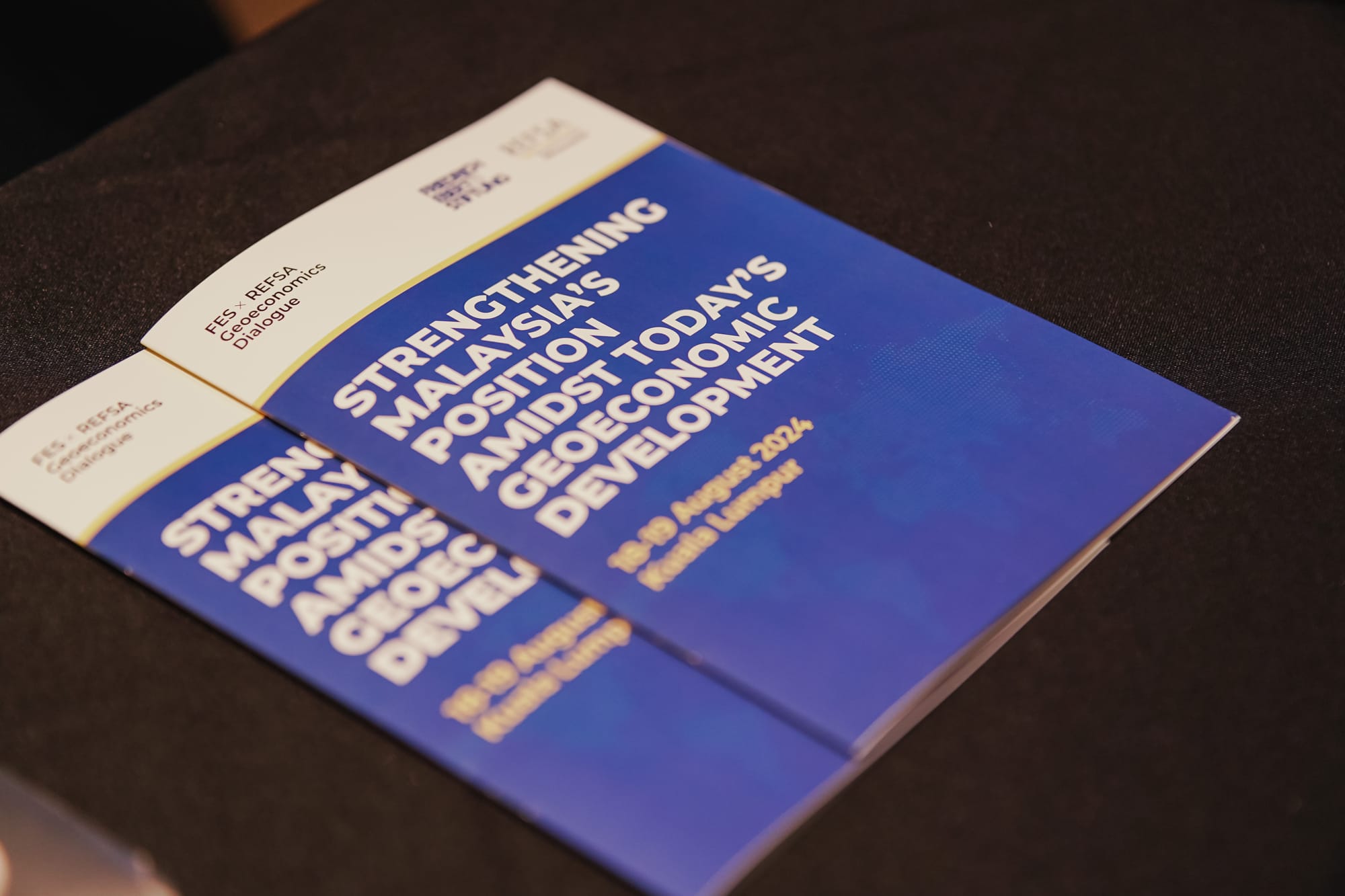
[REFSA Geoeconomics Dialogue] Strengthening Malaysia’s position amidst today’s Geoeconomics development
Malaysia needs to adapt its foreign policies and seek new frameworks to navigate the changing geopolitical and geoeconomics megatrends. The importance of active management of Malaysia's neutral stance can not be overstated.
![[REFSA Geoeconomics Dialogue] Strengthening Malaysia’s position amidst today’s Geoeconomics development](https://storage.ghost.io/c/fc/9c/fc9cd33c-f8fc-48d7-83f7-cfd422447f8c/content/images/size/w2000/2025/01/image-2.png)
Event was held on September 16, 2024
2024 has seen Malaysia take a strong stance internationally on the Gaza conflict, announced the decision to join BRICS+ and OECD as well as unveiled a National Semiconductor Strategy among other things. As geopolitical and geoeconomic impacts are increasingly intertwined and hard to disentangle, Malaysia’s foreign policies and position in global affairs will most certainly influence its economy and trade growth.
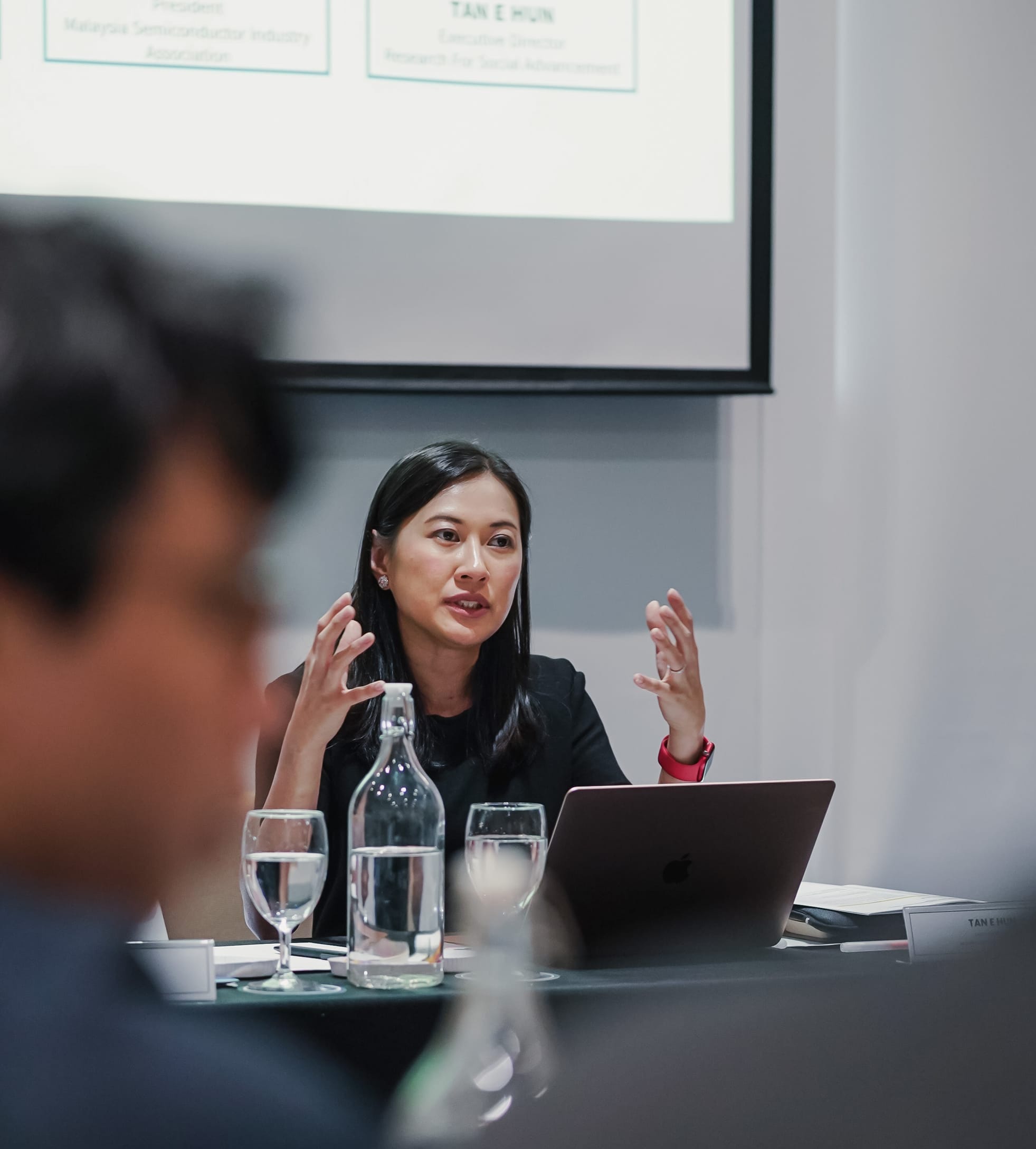
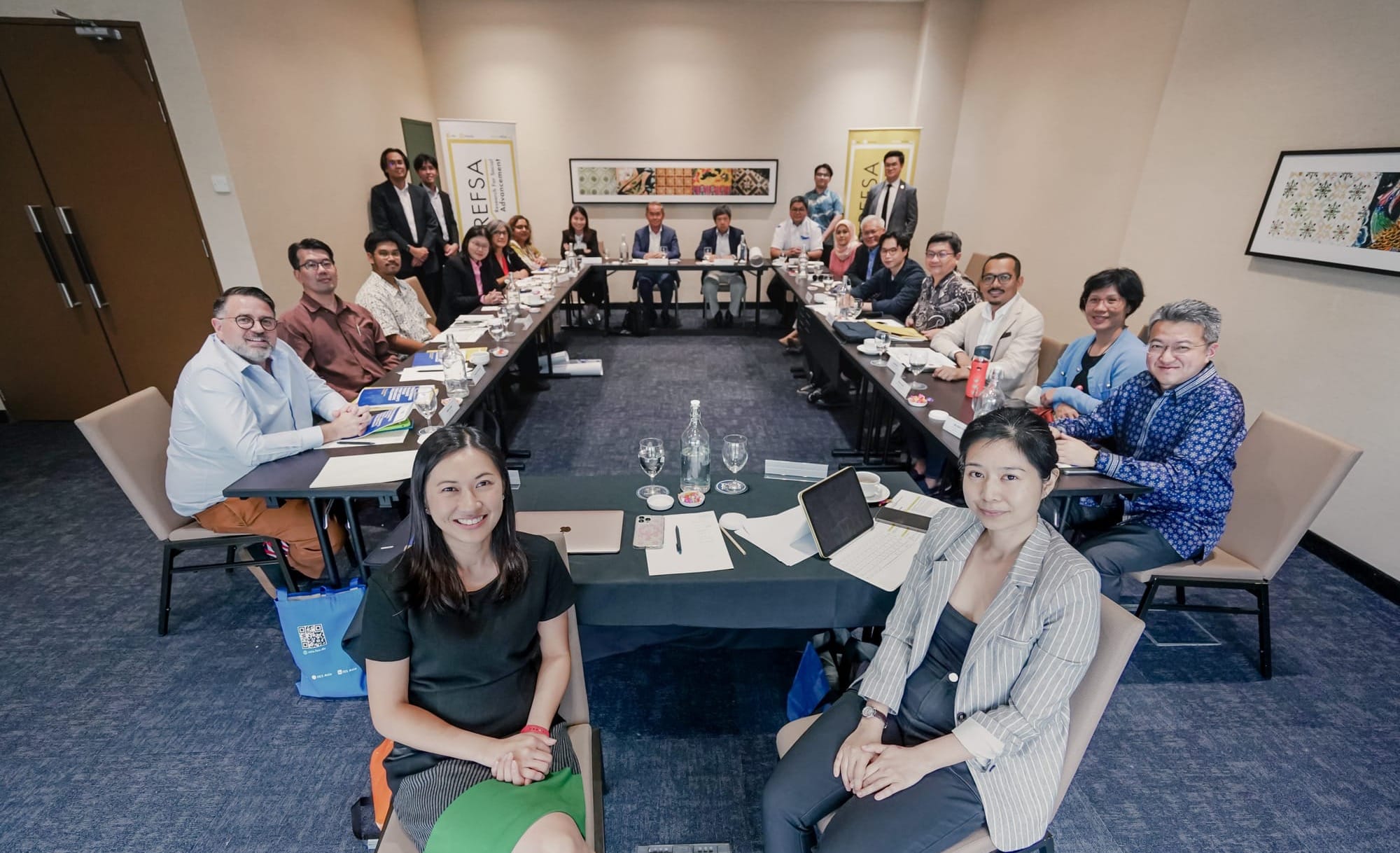
There is a need for a wider debate on how Malaysia can adapt its overall strategies to these changing environments. To deliberate on the challenges facing Malaysia and how the nation should best respond, E Hun convened a diverse group of national thought leaders from international relations, economics, policymakers to industry players for a full-day closed-door roundtable. Through analysing the global order of the day, the roundtable facilitated discussions focusing on three major trends: the US-China trade war, global supply chain reorganisation and impact of technological change.
In her opening speech and subsequent discussions, E Hun highlighted the following key points:
Current state of play
Geopolitics and Geoeconomics
Malaysia faces the challenge of adapting to a more complex and competitive global environment. This requires strategic positioning and policies to safeguard its interests while maintaining stability in an increasingly polarised world. This requires strategic positioning and policies to safeguard its interests while maintaining stability in an increasingly polarised world.
Geoeconomic trends are driven increasingly by geopolitical logic, and are reshaping global trade practices. Politicisation of market access through protectionism, sanction regimes, and trade agreements is becoming more prevalent. This resulted in a reorganisation of the global supply chains. Now, “resilience” is the keyword as companies bolster the security of their supply chain by increasing the diversity of their sourcing and establishing bases in new locations to better prepare for future uncertainties. At the same time, the US-China technology bifurcation and subsequent technology war creates a new stage for uncertainties, for example signs of the semiconductor supply chain gradually geared towards a slow separation of a US or China controlled supply chain.
Today’s geopolitical situation has also prompted governments and analysts to seek new frameworks to navigate the megatrends. Development models that once relied on industrialization, export-driven growth, and cheap labour models are becoming obsolete. Countries find that they can no longer rely merely on these “business as usual” approaches.
Emerging trends
Geopolitics
Multi-polarisation is increasingly prevalent, not just due to tensions between US and China, but also the“rise of the rest” in the form of other regions such as the Arab countries, East Asia or South America. The various mini-laterals pose interesting dynamics as hedging and balancing acts amongst countries see groupings such as BRICS, G20 etc taking stance in global conversations from climate change to digital acceleration and technology transfers. To that aspect, ASEAN is a crucial platform barring its imperfection as it allows smaller countries to manoeuvre between the bigger countries and blocs.
Geoeconomics
Concerns of a fragile and fragmented global economy in the coming decade, prone to shocks and crises is not unfounded. The US-China trade war has caused companies worldwide to embark on supply chain reorganisation and replication which has been a windfall to Malaysia’s electrical and electronics industry. Malaysia needs to manage its position through strategic foreign and industrial policies. For example, as more companies look to manufacture in and export from Malaysia, some can be seen as a way of circumventing trade restrictions. Too much of this and Malaysia runs the risk of being blacklisted by other countries as merely a proxy for Chinese made goods.
Technological advancement is an area that brings risks and opportunities to Malaysia. Technological advancement may create an environment where the winners would be the holders of the IP while the rest of the world become price takers. The goal of more global income convergence is at risk as countries’ GDP trajectories become more divergent along the lines of the tech haves and have nots of the world.
Strategies and policy recommendations
The importance of active management of Malaysia’s neutral foreign policy stance can not be overstated.
Malaysia’s active non-aligned approach meant that it could exercise its own agency to be friendly towards the West as well as China. However this requires very careful management of perceptions across all spheres of influence. There should be constant engagement with all sides simultaneously to actively reassure, reiterate and remind foreign partners and companies of Malaysia’s stance to be open for business and trade with all parties. Decisions such as joining BRICs may be seen to the West as a pivot to China, even though domestically, Malaysia is seen as exercising her right as a sovereign nation to join a club that served its own interests. Such nuances need to be strategically managed.
Malaysia should continue to enhance its strengths through positioning itself as an indispensable trade player and partner on the global stage, as seen in the global semiconductor supply chain. Firmly indispensable within the supply chain, locations such as Penang successfully captured a huge part of the back-end services required for the chip-making processes. Many Malaysian companies embedded in the supply chain are now seeking to move up the value chain toward providing front-end services and solutions.
Unlike the 1990’s, Malaysia should be more selective on the types of foreign direct investments (FDIs) allowed into the country. Policies such as ensuring localisation – of knowledge, talent and know-how – through integration of global corporate activities with domestic players is a way to ensure positive spillover to the economy.
Lastly, Malaysia must continue to strengthen its position through increased commitment to regional or international economic initiatives that could widen its circles of global partnership and allow adaptability to new dynamics. There should be a focus on vertical integration with other countries such as those in ASEAN to move towards cohesive economic cooperation instead of competition. Such endeavours may include more government and multi-layered participation in engagements, but closer to home, Malaysia can lead in significant ways to strengthen economic collaborations and discussions among ASEAN countries to promote complementary and mutual benefits within the region. Malaysia chairing ASEAN in 2025 is a great opportunity to do so.
Overall, Malaysia’s natural advantage through its geographical location, multilingual population and traditionally neutral diplomatic relations gives it an advantage in navigating the emerging new global order. What it should do is strengthen its economic position through more active communication on the world stage, as a nation that is stable, reliable and business friendly. Simply put, Malaysia should position itself as the ideal country to do business with in this region.
To do so, Malaysia need to ditch the “race to the bottom” model, and compete instead on talent building, increasing domestic capabilities and attracting high value investments to secure long term economic growth. The new narrative is that the country not just provides for its own internal market, but to serve global markets in various future looking industries, from chip-making to EV cars, medical equipment making to agricultural or aerospace.